ANSI and API are two sometimes confused process pump types. This uncertainty may lead users to choose ANSI pumps with lower cost when API pumps are required for applications, and in a few cases, users may choose more expensive API pumps when ANSI pumps can effectively handle the required working conditions.
What is ANSI pump?
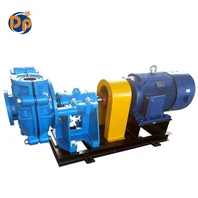
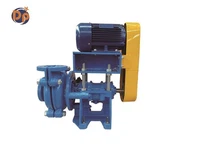
ANSI is an acronym for American National Standards Institute. ANSI pump is in accordance with ANSI standard B73 1. Horizontal, end suction, single-stage centrifugal pump with cantilever impeller and back pull structure. The standard name is: Specification for horizontal end suction centrifugal pumps for chemical process. The most obvious feature of the pump is the interchangeability between different manufacturers and brands (ANSI pumps). They must comply with the dimensional standards established by ANSI to make them identical in interface and shell dimensions, regardless of who made them.
ANSI B73. 1 the standard sets key dimensions for each of the 27 centrifugal pumps and provides a range of options for end users.
ANSI pumps are comparable to those manufactured in accordance with API 610 and provide a stronger design than those manufactured in accordance with HI.
ANSI pump applications
ANSI pumps are often used to deliver low viscosity liquids, such as water, alcohol and other less corrosive liquids. Using different impeller types, they can transport liquids with or without solids. They can also be made of high hardness and alloy materials for more harsh and corrosive environments.
For decades, ANSI pump has been an important equipment in the chemical industry. They are also commonly used in food processing, pulp and paper, textiles, mining, general manufacturing and other typical processing plants.
In recent years, there has been a lot of discussion on adjusting ANSI pumps to expand their use in the oil and gas industry (the field of API pumps). In order to meet the environmental requirements of the site, the pump must meet additional standards, such as reliability under operating conditions.
Advantages and disadvantages of ANSI pump
Advantage:
1) The dimensional interchangeability of different manufacturers and brands (ANSI pumps) provides more choices for end users
2) When replacing the pump, the user does not need to reconfigure the motor, coupling, impeller, base, volute or pipeline
3) ANSI pumps and / or components can be purchased and used at any time
4) Cheaper than API pump and stronger than HI pump
Disadvantages:
1) Thick and / or viscous fluids are usually not well transported
2) Generally, it cannot replace other centrifugal pump types
What is API pump?
API is the acronym of the American Petroleum Association. It is an organization that formulates technical standards for the oil and gas industry. API 610 is a centrifugal pump standard prepared by API.
API pumps comply with the centrifugal pumps described in the general refinery service standard 610 formulated by the American Petroleum Association (API), which is named: Central pumps for petroleum, petrochemical and natural gas industries. It includes three categories of pump types: cantilever pump, two-end support pump and vertical suspension pump. Horizontal, end suction, single-stage and cantilever centrifugal pumps are only a small category.
Different from ANSI standard (specified appearance and interface dimensions), API 610 standard focuses on the structure and design of the pump, especially related to the ability of the pump to deal with high temperature, pressure and discharge.
API pump application
API pump is the choice of more challenging (important working conditions or special working conditions) applications in the oil refining industry. Taking horizontal, end suction and cantilever pumps as an example, their shell, bearing box, pump foot support and back-pull arrangement are all designed to achieve the highest efficiency and reliability in refinery applications, as well as control discharge and safe treatment of liquids that may cause environmental damage.
Considering the harsh nature of oil and gas applications, API 610 is a very strict standard. Since the contents involved in this standard basically come from good engineering verification and operation practice, the products implementing this standard have outstanding advantages such as high safety and reliability, long service life and convenient installation and maintenance. At present, it has been widely used in equipment under important working conditions and key occasions at home and abroad (such as key pumps in petroleum, chemical industry, coal chemical industry, thermal power plant, nuclear power plant, etc.). However, its manufacturing cost is always much higher than that of pumps manufactured according to hi standards. The end suction centrifugal pump manufactured according to API 610 standard is equivalent to ANSI pump.
Advantages and disadvantages of API pump
Advantage:
1) Able to withstand higher temperature and pressure
2) Better handling of liquids causing environmental damage
3) Designed to control emissions required by EPA
Disadvantages:
1) API pumps are more expensive
2) Not as flexible or readily available as ANSI pumps
3) API pumps are generally less efficient than ANSI pumps
How to select the two types of pumps?
Generally speaking, ANSI pumps can provide relatively reliable services in various applications. They are the preferred pumps for chemical processes. They provide great flexibility and ease of operation.
API pumps have heavier load and should be considered for higher pressure and temperature. They are the preferred pumps for aggressive oil refining processes.
In addition, in addition to horizontal, end suction, single-stage and cantilever centrifugal pumps, API pumps also include many other types of centrifugal pumps, such as end supported pumps (including single-stage, two-stage and multi-stage pumps, radial split and axial split pumps, single shell and Double Shell pumps) Vertical suspension pumps (including single shell and Double Shell pumps, volute, guide shell and axial flow pumps, long shaft and cantilever pumps) are widely used - mainly in equipment under important working conditions and key occasions in petroleum, petrochemical and natural gas industries.
Summary
ANSI pump only involves one type of pump: horizontal, end suction, single-stage centrifugal pump, with cantilever impeller and back pull structure. API pump involves three types of pump types: cantilever pump, two end support pump and vertical suspension pump.
Pump selection is not just reliability, effectiveness and cost. Whether you pump chemicals, sewage or oil, safety is crucial. Any decision must take into account the specific operating conditions and the characteristics of the fluid transported.